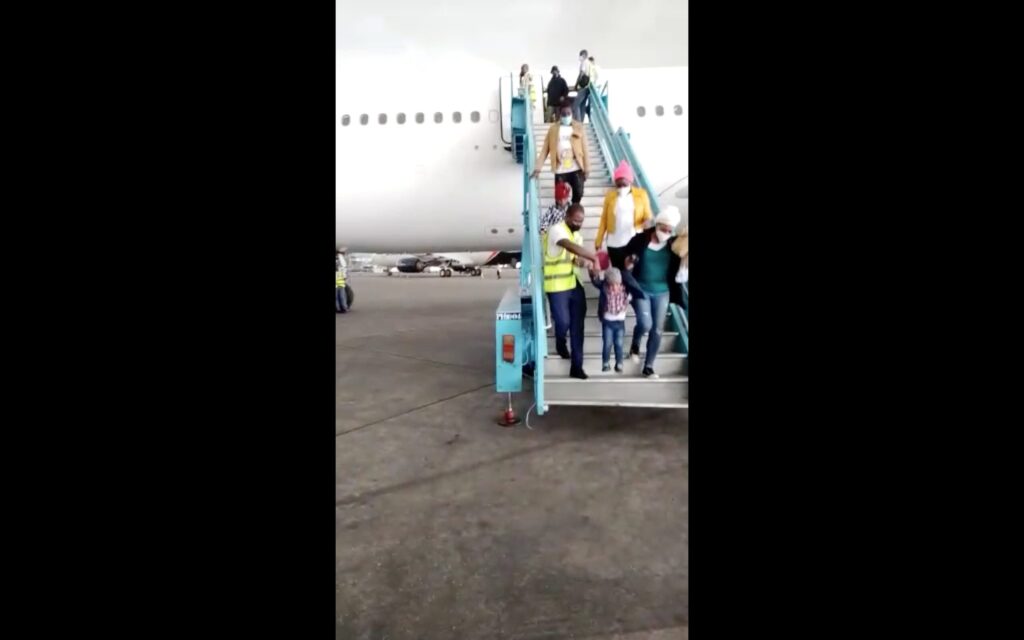
A deportation flight carrying 50 Nigerian returnees landed at the Lagos cargo Airport yesterday 10.03.2026. Among those on board were three women and six children, people returning not by choice, but through forced removal.
For most of the returnees, the journey home was filled with uncertainty and anxiety. Yet one case on the flight drew a particular concern from fellow passengers: a mother traveling with two children, one of whom is autistic and highly hyperactive.
According to fellow returnees during our interaction at DERS apartment, caring for the child proved extremely difficult right from the departure Airport in Munich and onboard the flight. Autism requires specialized support, patience, and routines, things that are difficult to maintain during forced travel and sudden displacement. Fellow migrants had described the situation as heartbreaking.
From our Interaction with the family after arrival, the mother had not been given time or preparation to plan for her child’s needs before the deportation. She arrived in Lagos without basic resources for the child’s care. Even something as simple as food became a challenge.
The mother explained that her child does not eat many of the foods commonly available as everyday meals in Nigeria. This left her worried about how she would manage in the coming days.
By evening, the stress and uncertainty became overwhelming. The mother broke down in tears as she struggled to think about what comes next not only for herself but for her child who requires specialized attention.
What stood out most was the reaction of the other returnees. While many of them were dealing with their own fears and worries about restarting life in Nigeria, they expressed deep concern for the mother and her child. Several passengers said they were particularly troubled by how difficult it would be for her to find the support her child needs.
Children with autism often require structured learning environments, specialized education, and medical or behavioral support. Access to such services can already be limited, and for someone returning suddenly without preparation and comes at a high cost, the challenge becomes even greater.
This story highlights an often overlooked reality of deportation processes: the people involved are not just statistics. Among them are families, children, and individuals with complex needs. For this mother and her child, the journey did not end when the plane touched down in Lagos. In many ways, it may only be the beginning of a far more difficult struggle one that will require support, understanding, and attention from communities and institutions alike.